
Dubai desert safari blog
Dune Buggy or Quad Bike in Dubai: Compare the Actual Ride
Compare dune buggy and quad bike Dubai options. Check driving roles, seats, riding time, transport, equipment and full activity costs, with 10 FAQs.
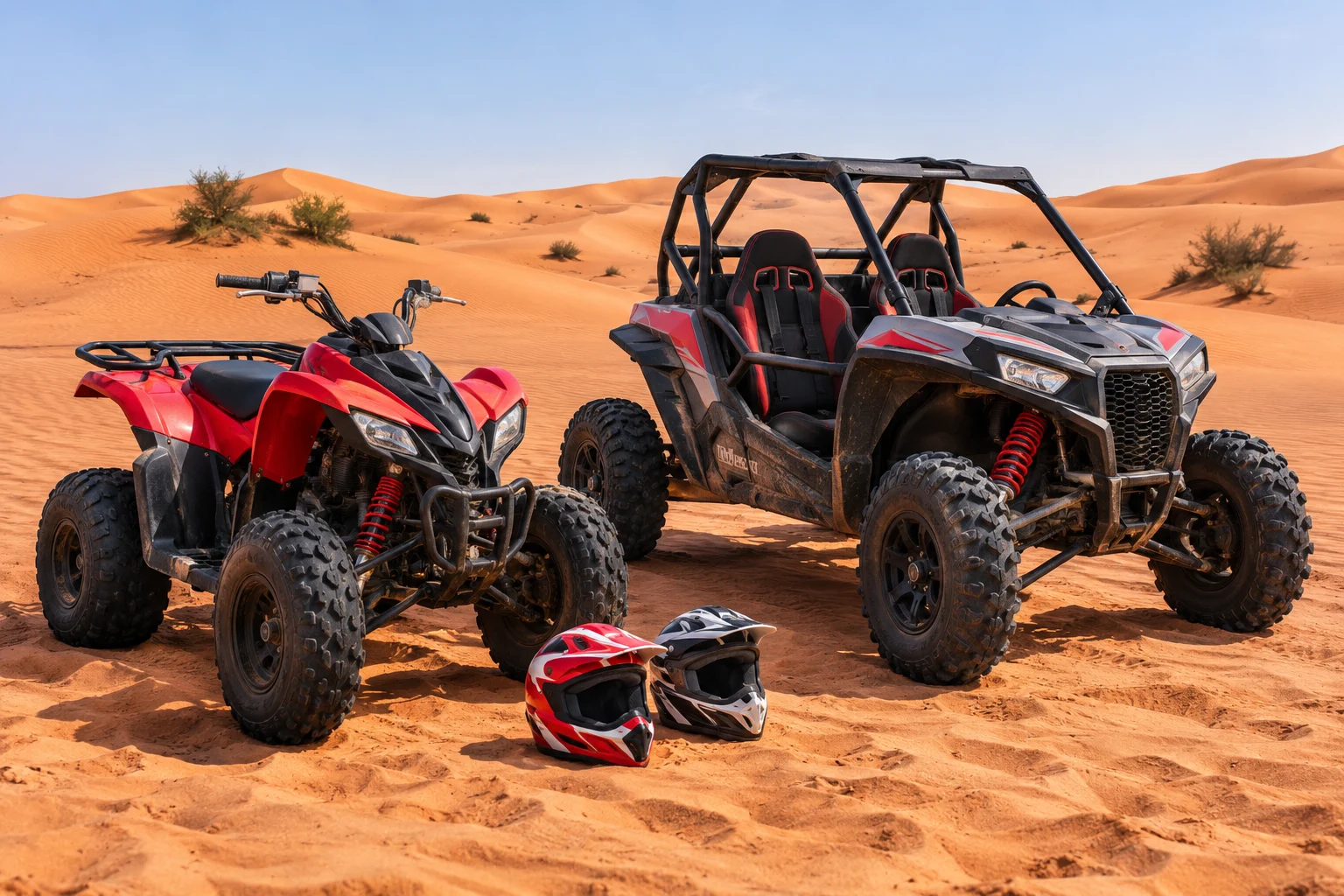
Two pictures can look equally exciting while showing very different activities. One has a rider sitting over a quad bike's seat, while another shows guests seated inside a buggy with a visible frame around them. Before choosing from the photographs, find out how the actual product works and which role you will have.
A dune buggy versus quad bike Dubai comparison should begin with the vehicle, driver and route. It should also cover the price unit, riding period, equipment, supervision and transport to the activity. Those details help you compare experiences that may otherwise share the same broad desert adventure label.
This guide explains how to prepare that comparison without claiming that one vehicle is best for every guest. It includes questions for first-time participants, groups with different preferences, safari combinations and ten FAQs. The responsible activity provider should confirm eligibility and operating instructions for the actual booking. Personal suitability cannot be decided from a general article.
Understand the basic difference in position
A quad bike usually has a saddle-style position with handlebars. A buggy usually has seated positions inside a frame and uses a different driving arrangement. These general descriptions help you recognise the categories, but they do not identify the precise model, controls or seating of your selected product. Ask for that information.
Avoid turning a visual difference into a safety ranking. A frame or an extra seat in a picture does not establish whether a particular activity is suitable for a guest. Vehicle condition, instructions, route and participation rules all matter. Compare the confirmed activity rather than assuming that one shape answers every practical question.
Ask which exact product is being quoted
The tour collection lists safari combinations and standalone activity choices. Name the product when enquiring. A safari with a buggy component and a standalone buggy booking may have different transport, timing and inclusions even though both involve a buggy somewhere in the experience.
Ask whether the quote refers to a particular vehicle capacity, riding arrangement and duration. If you are comparing several providers, write these features down in the same order. A vague answer about desert adventure is not enough to compare two bookings whose actual activities might be quite different.
Find out who drives
Ask whether you are booking a driving role or a passenger place. Some visitors use the word ride to mean either. Clarify who controls the vehicle, how instruction works and what requirements apply. Do not assume every guest in a multi-seat vehicle will drive during the session.
If several people want to drive, ask whether changes are allowed, who is eligible and how that affects the booked time. Keep the answer with the quote. An informal promise from another guest is not a replacement for the activity provider's rules, and nobody should change roles without the responsible team's instruction.
Separate the safari driver from the activity
The vehicle that transfers you from a hotel is not the same product as an optional quad-bike or buggy session. Ask which journey is included and where the activity begins. A safari booking does not automatically mean you will drive its main transport vehicle or take control during another part of the trip.
The quad-bike safari guide explains questions about a combined package. Use it alongside the specific product details. Identify the safari activities, the riding component and any separate purchase, rather than assuming that one broad title supplies everything shown across the website.
Compare capacity with your actual party
Ask how many people the selected vehicle carries and which places are available for the booked activity. A two-seat or four-seat label describes capacity, but it does not resolve driver eligibility, child participation or how a particular booking is charged. Give the provider your actual party details.
If children are involved, provide the ages and ask about the activity's current requirements. Do not infer permission from a spare seat or a family photograph. The family safari guide can help organise the wider outing, while the activity provider must explain the rules for the ride itself.
Do not force everyone into the same activity
A group can share an outing while having different interests. One person may want a driving experience, another may prefer photographs and someone else may want to skip riding. Explain the difference before booking. Ask how waiting, supervision and meeting afterward would work for the chosen arrangement.
The guide for friends with different activity interests helps prepare that discussion. Do not assume a non-participant can wait anywhere or that an extra person will provide supervision. The practical plan should be clear for both participants and anyone remaining outside the activity.
Ask about the route and supervision
Find out how the riding area or route is organised and what supervision the activity includes. A photograph of wide dunes does not explain where the booked session operates. Ask whether the activity follows a defined area, a guided route or another arrangement, and listen carefully to the provider's description.
Avoid interpreting a dramatic promotional image as permission to copy the manoeuvre. The activity should be followed according to the instructions given to you. A first-time guest needs a clear explanation of the expected behaviour, not a challenge to recreate whatever looked most exciting online.
Make instruction part of the enquiry
Ask how first-time participants are introduced to the vehicle and what happens before the session begins. Tell the team about relevant experience honestly. Having driven an ordinary road vehicle does not automatically explain another vehicle's controls or operating conditions. Equally, a beginner should not feel pressure to pretend confidence.
If you do not understand an instruction, ask before moving. Follow the rules about spacing, stopping and communication supplied for the actual activity. The goal is to participate within the confirmed arrangement, not to discover your own route or test what the vehicle can do beyond the provider's instructions.
Check what riding time means
A quoted activity period can mean different things unless the provider explains it. Ask how instruction, equipment fitting, travel to the riding area and any pauses relate to the stated duration. You do not need a promise for every minute, but you should know what the quoted period describes.
Do not compare a broad three-hour outing with a riding session simply because both numbers appear beside an activity photograph. The outing may include transfers or waiting as well as the ride. Write down the actual components and ask the team to identify the activity time within the whole experience.
Leave room in the rest of your day
A session involves more than the moment the vehicle moves. Getting to the location, receiving instructions, preparing and meeting your party afterward all take practical time. Tell the team about any fixed reservation or flight that affects your day before agreeing the schedule.
Avoid booking another timed activity immediately afterward on the assumption that the riding period equals the whole visit. Ask what return or finishing information can be provided. A sensible margin makes it easier to enjoy the experience without checking the clock throughout an activity you wanted to try.
Read the price unit before the number
Per person, per bike, per buggy and per session are different units. A large vehicle price may cover several places, while a smaller number may apply separately to each guest. Compare the complete total for your actual group rather than choosing the lowest number visible on a page.
The safari price guide explains the wider method. Ask the team to separate activity cost, transport and selected extras. If a product is a tailored request, obtain the current quotation instead of assuming that an older example or another website provides the right total.
Use a fictional calculation to compare fairly
Imagine one fictional activity costs AED 300 per guest and another costs AED 800 for the vehicle arrangement your group needs. Two guests would compare AED 600 against AED 800 only after checking that both totals cover the same service. These invented figures explain the arithmetic and are not current activity prices.
Then check duration, capacity, transport and driving roles. If the products differ, the totals alone do not decide value. One might provide the experience your group wants while the other includes something you do not need. A useful comparison keeps the practical features next to the cost instead of hiding them behind a discount label.
Distinguish a standalone activity from a safari package
A standalone riding session may suit someone whose main interest is the vehicle experience. A safari combination may add transport, camp time or other confirmed components. Read each inclusion separately. Dinner, entertainment and hotel collection should not be assumed simply because the activity takes place in the desert.
Review the buggy safari option and compare it with the Polaris buggy option. Use the current descriptions to form your questions. Ask which product fits the party, rather than mixing the inclusions from two pages into an imagined third package.
Decide whether the wider safari matters
Some guests mainly want to try driving, while others want an evening outing with one optional activity. There is no need to choose the longer product automatically. Think about the experience you want to spend time on and whether the other components are useful additions or distractions.
If dinner is part of the plan, read the camp seating guide. Confirm where the riding component sits in the itinerary and how you join the rest of the evening. A good package description explains the connection between its parts, not just a collection of activity names.
Check transport to the meeting point
Ask whether your product includes pickup or requires you to reach an agreed location. If you travel independently, obtain the exact meeting instruction and check the suitability of the road arrival arrangement. Do not drive an ordinary road vehicle into dunes because a map pin appears close to an activity area.
The self-drive arrival guide distinguishes reaching a meeting point from driving an off-road activity vehicle. Keep the two ideas separate. Confirm who handles each part of the journey and where your own vehicle stays if you bring one.
Confirm the return arrangement
Find out where you finish and whether transport back to your accommodation is included. A meeting-point activity should be planned from arrival to departure. If you are using another transport service, understand how you will contact it and whether a fixed collection time is sensible for the actual programme.
Tell the team if you need an essential vehicle feature for the transfer. A particular activity capacity does not answer every transport question. Consider passenger count, equipment and bags separately, then keep the current instructions available so nobody in the group follows an older location or time.
Prepare clothing and belongings for the actual activity
Ask the operator about required clothing and equipment before you arrive. Use the clothing guide as general preparation, then follow the activity-specific instructions. What feels comfortable for sitting at dinner may not meet the requirements for a riding session.
Keep loose belongings secure as directed. Ask where bags and personal devices can remain during the activity. Do not assume you can use a phone while controlling a vehicle or carry a camera in whatever way seems convenient. Follow the provider's instructions rather than risking distraction for a photograph.
Understand supplied equipment
Ask what equipment the activity provides and whether you must bring any item yourself. The responsible team should explain how it is used. A photograph of a helmet does not establish fit, availability or the complete equipment procedure for every participant. Clarify an essential requirement before booking.
Read the safety guidance and share relevant practical concerns through the booking channel. For personal advice about participation, consult an appropriate qualified professional. Neither a vehicle frame nor an enthusiastic review can decide suitability for a particular guest with individual concerns.
Plan photographs around the activity rules
Ask when photographs are permitted and where non-participants may stand. A stationary photograph before or after a session can be a useful memory without interfering with instruction. Do not make a photo plan that depends on stopping in an unauthorised place or asking another rider to handle your phone while moving.
If professional photographs are offered, ask about their price and what is supplied. Keep the purchase optional unless it is clearly included. A promotional image does not guarantee that you will receive the same type of photograph, lighting or editing. Decide from the actual service description.
Respect other participants
Ask before taking close photographs of strangers and accept a refusal. Keep clear of active areas and follow the team's directions. The best time to organise a group picture is when the responsible staff say it is appropriate, not when guests are trying to prepare or return vehicles.
A small group should choose one person to hold the relevant booking details and instructions. That reduces repeated questions and helps everyone understand where to meet. You can enjoy the activity independently while still making the wider plan easy for the people travelling with you.
Review changes before confirming
Ask what happens if an activity cannot operate as planned or if you decide not to participate. Read the terms for the actual product and any separate supplier. Do not assume that removing a component automatically produces a particular refund or replacement. Clarify important conditions before payment.
Keep the cancellation policy and accepted quote together. If an essential detail changes, request the current options from the responsible team. Save the revised confirmation so your party understands the same vehicle arrangement, timing, transport and total rather than following separate versions of the plan.
Make a comparison note you can explain aloud
Try describing each offer in one plain sentence: who participates, which vehicle is supplied, who drives, what the activity period covers and how you reach the start. If you cannot explain the product without using vague words such as adventure or premium, you may still need a practical detail clarified.
Then add the full total and identify anything optional. This simple note is useful when friends share the cost, because everyone can see what the group has actually chosen. It also makes it easier to spot a mismatch, such as comparing a passenger place with a driving session or a standalone activity with a longer safari.
Ask the provider about the mismatch before deciding. Do not assume the more expensive option supplies the missing feature or that the cheaper one excludes it. The comparison should be grounded in confirmed services. Once the answer is clear, choose according to the experience your party wants rather than a collection of promotional claims.
Keep the accepted note with the current confirmation and put old proposals aside. On the day, follow the actual instructions given by the responsible team. A good comparison prepares you to understand the activity; it does not replace the provider's briefing or create permission to do something outside the agreed arrangement.
Ten frequently asked questions
1. What is the main difference between a buggy and a quad bike?
They generally have different seating and controls. A quad typically uses a saddle-style position and handlebars, while a buggy has seated positions inside a frame. Ask about the exact model and arrangement being supplied. The visual difference alone does not establish personal suitability or activity rules.
2. Will I drive the vehicle myself?
Ask whether your booking supplies a driving role or a passenger place and what requirements apply. Do not assume every guest in a multi-seat vehicle will drive. Any role changes should follow the provider's rules and instructions rather than an informal agreement between participants.
3. Which activity is better for a beginner?
Explain your experience honestly and ask the responsible provider about instruction, route and participation requirements. Choose from the confirmed arrangement rather than a general claim that one vehicle suits everybody. If you do not understand an essential point, resolve it before taking part.
4. Can children join a buggy or quad activity?
Provide the child's age and ask about the actual product's current rules. A spare seat or a family photograph does not establish eligibility. Confirm the relevant requirements with the activity provider and consider the full transport and waiting arrangement for the family as well.
5. Are prices per person or per vehicle?
The unit depends on the selected product. Ask for the complete total for your actual party, capacity and driving arrangement. Separate transport and extras where relevant. Compare matching services rather than treating the smallest visible number as the price of the whole experience.
6. Is hotel pickup included?
Check the chosen product and your location. A standalone activity may use a meeting point, while a safari combination can have another transport arrangement. Confirm the return too. Do not assume a vehicle activity automatically includes collection from and return to every hotel.
7. Does a buggy booking include dinner?
Only treat dinner as included when it appears in the confirmed service. Standalone activity products and safari combinations can differ. Read each component separately and ask how the riding session connects with the rest of the itinerary before expecting a camp meal or entertainment.
8. Can a guest skip the ride?
Discuss the actual waiting and meeting arrangement before booking. Ask where the non-participant stays and whether any supervision or separate service is needed. Do not assume the activity provider supplies additional assistance or that guests may wait in any convenient-looking area.
9. Can I take photographs during the session?
Follow the activity provider's instructions about devices, stopping and photography. Ask when a stationary picture is appropriate. Do not plan to use a phone while controlling a vehicle or enter an active area for a better angle. Confirm any paid photo service separately.
10. Where can I ask for a comparison quote?
Use the contact page with your date, guest details, experience and transport needs. Name the products you are considering and ask for the full service and total. Keep the final quote with the actual vehicle, timing and participation instructions.
Choose the experience behind the photograph
A useful comparison explains who drives, what vehicle is supplied, how long the activity lasts and what the price covers. Add the transport and wider safari only if you want them. With those details clear, you can choose a desert activity for its actual experience rather than its most dramatic picture.