
Dubai desert safari blog
Overnight Desert Safari Dubai: Sleeping, Packing and Return Plans
Plan an overnight desert safari Dubai stay. Check sleeping arrangements, bedding, meals, facilities, packing and the morning return, with 10 FAQs.
An overnight desert safari changes more than your return time. You are choosing a place to spend the night, a sleeping arrangement and a morning plan as well as an evening outing. Before imagining a quiet sunrise, make sure you understand the practical details that will let you enjoy the whole stay.
The most useful question is simple: what exactly happens between arrival and departure? Ask where you sleep, what equipment is supplied, which meals are included and when you return. Those answers matter more than a broad promise of a night under the stars. A beautiful photograph cannot tell you whether the actual arrangement suits your group.
This guide explains how to compare an overnight desert safari Dubai booking. It covers sleeping space, privacy, facilities, food, transport, packing, family questions and ten FAQs. It does not describe one guaranteed camp layout. Confirm the actual service for your chosen date before making plans that depend on it.
Begin with the published tour and your priorities
The overnight safari option gives you a starting point for the enquiry. Read the current description and ask for the specific camp and itinerary. Decide why you want to stay overnight. You may value the longer desert experience, a quieter pace or the opportunity to see the landscape in morning light.
Share those interests with the team. If you only want the evening activities, an overnight stay may add practical needs without adding the experience you care about. Conversely, someone who wants meaningful time after dinner should ask what is actually possible after the evening programme. Compare the confirmed plan rather than choosing from the title alone.
Make a short list of essential features
Separate essential needs from nice additions. A particular sleeping arrangement, toilet access or a fixed return commitment may be essential. A preferred photograph or optional activity may be flexible. Naming the difference helps the provider answer clearly and helps you decide whether the available arrangement is suitable.
Ask each adult in your party what matters. One person may be happy with a simple sleeping space while another expects a private room. Resolve that difference before you book. An overnight plan works best when everybody understands the same product rather than carrying a different picture of desert camping.
Ask what you will sleep in
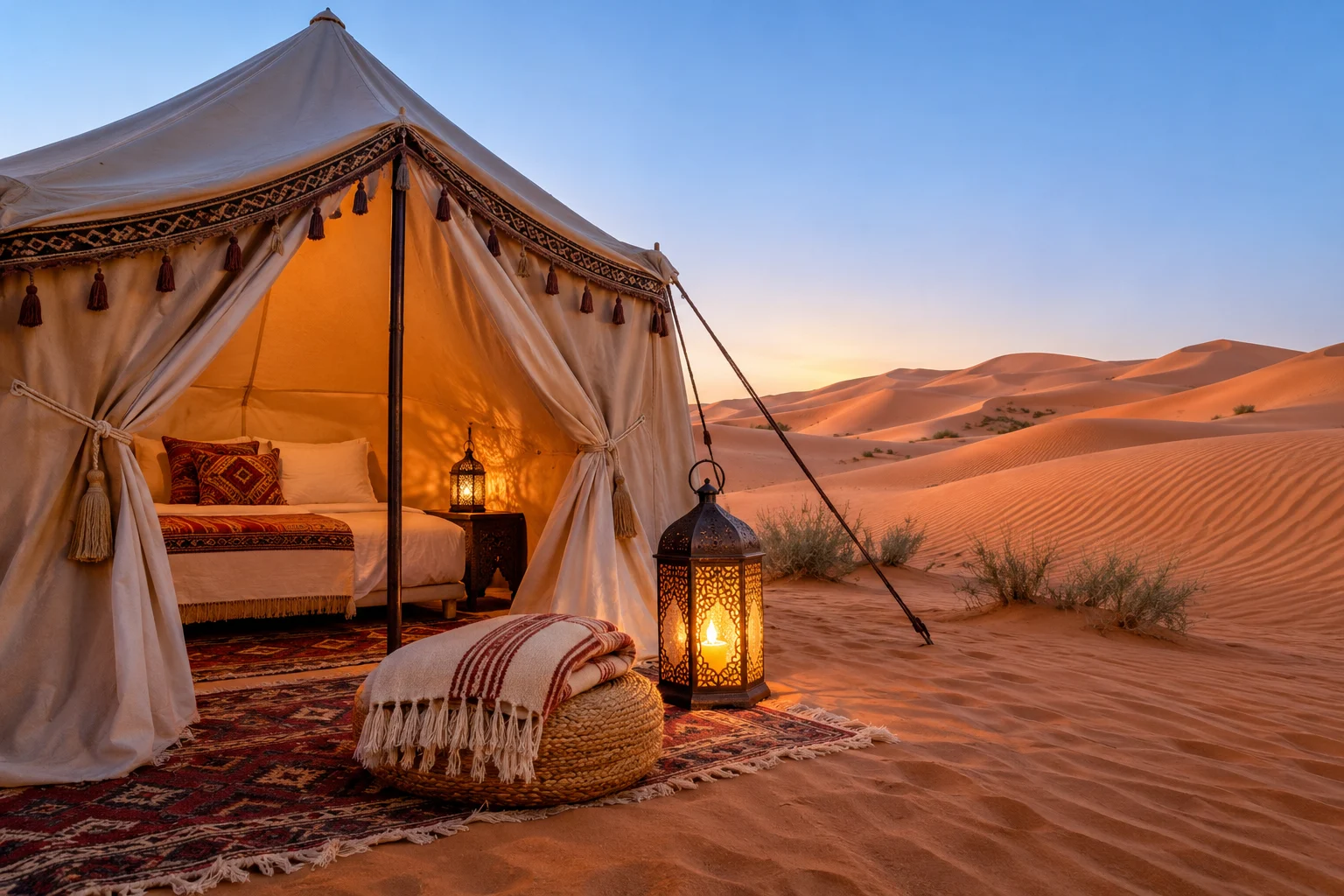
Find out whether the arrangement uses a tent, room, shared shelter or another setup. Ask what is reserved for your booking and whether other guests share the same sleeping area. Do not assume that an image on a general safari page shows the accommodation supplied for every overnight departure.
Request enough detail to picture the real space. Ask about the sleeping surface, bedding and any relevant equipment. Identify what you must bring yourself. A phrase such as basic camp can mean different things to different travellers, so use direct questions rather than relying on how luxurious or adventurous the label sounds.
Clarify bedding and storage
Ask whether a mattress, sheet, blanket and pillow are supplied and whether anything depends on the season or package. If a particular item is important to you, include it in the enquiry. A sensible packing list begins with knowing what the provider supplies, not buying duplicate equipment just in case.
Discuss how personal belongings are kept during activities and overnight. Bring only what you need and avoid treating a shared camp as secure storage for valuable luggage. If you need to carry a larger item, ask about the actual arrangement before departure. Passenger transport and overnight storage are separate parts of the service.
Understand privacy without guessing
Privacy has several meanings on an overnight trip. Your party might have a sleeping space to itself while sharing dining areas or facilities. A private transfer might still arrive at a shared camp. Ask which parts are exclusive and which are shared so you can compare like-for-like arrangements.
This is especially useful for couples, families and people travelling alone. Explain the feature that matters instead of asking only whether the trip is private. You may need a separate sleeping area, a particular table or fewer shared transitions. The provider should describe the available option and any effect on price.
Ask about the camp after evening activities
Find out what happens when the main evening programme finishes. Ask which areas remain available, whether there is a quiet period and how guests contact staff overnight. Do not assume a full activity programme continues throughout the night. Equally, an overnight label does not guarantee silence while other camp operations are taking place.
If quiet is your main priority, describe it before booking. Ask the team what it can reasonably confirm and what depends on the camp or other guests. A clear answer lets you decide with realistic expectations. It is better than choosing a product because another traveller once described a completely different night.
Check toilets and washing arrangements
Ask about the facilities supplied at the actual camp. Identify their location in relation to the sleeping area, how they are shared and whether relevant features can be confirmed. A general reassurance that facilities exist may not answer the practical question that matters to a particular guest.
If someone requires a specific access feature, discuss it before booking. Overnight suitability includes more than reaching the vehicle or tent. Think about the full route between sleeping space, toilets and dining area. Do not infer these features from a landscape photograph or assume every camp follows the same layout.
Keep personal questions focused on practical needs
You can ask about steps, distance, lighting or seating without sending unnecessary personal records. Share the information needed to explain the request through the proper channel. If a guest needs personal advice about participation, they should obtain appropriate qualified advice rather than treating a travel article as an individual assessment.
The safari safety page provides general preparation guidance. Use it alongside the operator's actual instructions. If an essential overnight feature cannot be confirmed, consider another arrangement rather than hoping the camp will turn out to match an unstated requirement.
Identify each meal and refreshment
Do not assume that an overnight price automatically includes dinner, breakfast and every drink. Ask which meals or refreshments are listed in the confirmation and when they are served. This keeps the comparison simple and helps you decide what, if anything, you need to bring with prior agreement.
A meal description should be read separately from a photograph of a dining area. Ask how seating works and whether the overnight guests follow the main evening dining arrangement. The camp seating guide explains useful questions about allocated places, service and upgrades.
Discuss important food requirements early
If a food requirement affects your booking, ask what can actually be confirmed for the selected camp and date. Do not rely on a broad menu label to answer every dietary question. Keep the responsible provider's reply with the reservation and avoid assuming that an old review proves the current kitchen arrangement.
Ask about drinking water and any permitted personal food. Some guests need a small familiar snack, while others want to understand the meal timing. Explain the request before departure. Bringing supplies without asking can create confusion about storage, service and what the camp allows.
Read the evening itinerary as a sequence
Ask when guests reach the camp, which activities come first and how the overnight stay connects with the evening safari. The exact order may be operational, but you should understand the main components. A longer stay does not automatically mean every activity from every other product is included.
The evening safari guide helps distinguish the general experience from your specific booking. Mark activities as confirmed, optional or unavailable rather than keeping an imagined list. That makes it easier to enjoy the actual outing without repeatedly discovering that a pictured extra was never part of the agreement.
Review activities you may want to skip
If you do not want dune bashing or another component, ask about the alternative before booking. Confirm how you reach the camp and meet your party again. An overnight stay does not itself remove the practical effects of skipping a transfer or activity that connects two parts of the programme.
Read the no-dune-bashing guide as a starting point. Follow the actual activity instructions and request suitable professional advice for personal concerns when needed. The booking team should explain the service, while the guest decides using the information appropriate to their situation.
Make the morning plan clear
Ask what happens after waking, whether breakfast is supplied and when departure begins. A sunrise photograph, a morning walk and another riding activity are separate requests. Do not assume that staying until morning includes all three. Identify the priority you would like the team to consider.
If you are interested in a specific view, ask whether the itinerary allows it and what conditions can affect the plan. Natural light and weather do not follow an advertisement exactly. An enjoyable morning can still be worthwhile when you leave room for the landscape and circumstances you actually encounter.
Confirm the return point and expected timing
Ask where the service finishes and what return information can be provided. If you need to check into a hotel, attend a meeting or catch a flight afterward, explain that before booking. Do not turn an approximate return into a promise that every transfer will take the same number of minutes.
Think about the rest of the day after the overnight stay. You may want time to rest, wash or change before another outing. A realistic plan includes those ordinary needs. Avoid stacking fixed reservations so tightly that the morning becomes a race rather than the relaxed finish you hoped for.
Pack after you know the setup
Begin with the supplied equipment list and current conditions. Choose a small bag, useful clothing layers and the personal items appropriate to your stay. The packing guide and clothing guide offer starting points, but the overnight provider should clarify specific requirements.
Do not rely on a single seasonal temperature claim to decide what to bring. Check the forecast close to departure and ask the team about the actual sleeping environment. Clothing for an evening activity may not answer every need for sleeping, waking and returning the next day.
Keep essentials reachable
Pack your phone, booking details, necessary personal items and a light source if the provider recommends one so you can find them easily. Ask about charging rather than assuming a socket will be beside the bed. A power bank may help, provided you follow its normal use and transport instructions.
Keep electronics protected from sand and avoid leaving belongings scattered between the vehicle, dining area and sleeping space. Before moving to another part of the camp, check your small bag. A tidy routine makes a shared environment easier to manage and reduces the chance of forgetting something during morning departure.
Consider family and solo arrangements separately
Families should explain the number of guests and children's ages and ask about the actual sleeping and transport setup. Do not assume a standard adult arrangement automatically works for children. The family safari guide helps prepare questions about supervision and practical comfort.
Solo guests should ask whether a single booking is accepted and how any shared sleeping arrangement works. Privacy and social atmosphere are different questions. The solo traveller guide can help you think about shared transport, dinner and personal preferences without expecting a particular group mix.
Agree the plan with every guest
Send the essential details to your party before booking: sleeping setup, shared facilities, meals, transport and return. Ask whether everybody understands and accepts the arrangement. People can enjoy simple accommodation when they choose it knowingly, but may feel disappointed if they expected something quite different.
If one guest needs an essential feature that is unavailable, discuss an alternative product. You do not have to force the whole group into an unsuitable overnight plan. A well-chosen evening outing can be a better decision than a longer stay booked only because its name sounds more adventurous.
Compare the full overnight price
Request the total for your actual party, date and pickup location. Identify sleeping equipment, meals, activities and transport as separate inclusions where useful. A starting price cannot settle every question about a tailored arrangement. Use the price comparison guide to organise the quotation.
For a fictional example, imagine a stay quoted at AED 400 with dinner included but breakfast as an optional AED 40 addition. If you choose that addition, compare AED 440 with other offers supplying the same services. These invented amounts explain the method and are not current tour prices.
Keep changes and cancellation in view
Read the terms for your actual product and any separately supplied activity. Check the cancellation policy and ask how changes are confirmed. An overnight arrangement may involve several practical components, so avoid assuming that changing one part leaves the rest automatically unchanged.
Save the accepted quote and current itinerary together. If the camp or essential setup changes, ask what that means for your party before departure. A revised photograph alone is not a complete explanation. You should still understand the sleeping space, facilities, meals, activities and return arrangement you are accepting.
Walk through an imagined evening before booking
Imagine arriving with your small bag and moving from the vehicle to the camp. Where do you leave the bag, and when do you see the sleeping area? After dinner, how do you reach the facilities and contact staff? These ordinary questions help reveal whether you understand the setup beyond its most attractive photograph.
Now picture the morning. You wake, collect your belongings and prepare for departure. Do you know whether a meal is supplied, where you wait and how the return works? If the answer is unclear, place that point on the enquiry list. The exercise is not about expecting problems; it is about understanding the whole service you are choosing.
A couple can do this together and compare expectations. One guest might imagine an organised room while the other expects a simple tent. A family might realise it needs more detail about the route to facilities. A solo traveller might want to understand shared accommodation. Each question becomes useful when it identifies a concrete feature the provider can answer.
Once those essential points are settled, keep a small optional list. A preferred photograph or extra activity can remain optional without weakening the main plan. Do not make the enjoyment of the whole night depend on a particular sky or an addition that was never confirmed. A clear base arrangement gives the stay its structure.
Before accepting the final service, check that all guests have read the same details. Ask for clarification on any essential gap and retain the reply. On departure day, bring the current confirmation rather than several earlier proposals. This makes the practical organisation simpler and gives you more room to enjoy the setting you chose.
Ten frequently asked questions
1. What is included in an overnight desert safari?
Use the selected product and written confirmation. Ask separately about sleeping equipment, meals, activities, pickup and return. The overnight label describes the length of the experience but does not guarantee every component pictured across the website. Confirm the actual service for your party and date.
2. Will we sleep in a private tent?
Ask what setup is supplied and whether the sleeping area is exclusive to your booking. A private transfer does not automatically reserve private accommodation. Request the actual arrangement, including any shared facilities. Choose from confirmed features rather than assuming that one photograph represents every departure.
3. Are blankets and pillows supplied?
Ask which bedding and equipment are included and what you need to bring. Check the actual sleeping environment and current conditions before packing. Do not buy or carry bulky items without understanding the setup. If an item is essential to your comfort, request a specific answer.
4. Does the overnight price include breakfast?
Only treat breakfast or another meal as included when it appears in the confirmed service. Ask when it is served and what separate additions cost. Check important food requirements with the responsible provider. A dining photograph or broad overnight title does not establish the meal arrangement.
5. Can children join an overnight stay?
Discuss the actual product, children's ages and practical arrangements before booking. Confirm sleeping space, transport, facilities and supervision expectations. A generic family label should not replace the details needed for your children. Choose an alternative if an essential requirement cannot be confirmed.
6. Can one person book an overnight safari?
Ask whether the selected departure accepts a single guest and how any shared arrangement works. Confirm sleeping privacy, transport and the full price for one traveller. Do not assume that a per-person label answers every availability or accommodation question for a solo booking.
7. Can I leave out dune bashing?
Request the available alternative before booking and ask how you reach the camp. Confirm where you meet any travelling companions afterward. If a personal concern affects participation, obtain appropriate qualified advice. Staying overnight does not automatically change the route or physical nature of another activity.
8. Is sunrise photography guaranteed?
Ask what the morning itinerary allows. Light, weather and operating conditions can affect the experience, and a promotional photograph is not a guarantee. If photography is your main reason for staying, explain that interest and confirm what can actually be arranged within the selected service.
9. What time will we return to Dubai?
Ask for the return arrangement and what timing information can be provided for your location. Explain any fixed commitment before booking and leave a sensible margin. Avoid building a flight or meeting plan around an assumed exact return taken from another visitor's experience.
10. Where should I request overnight details?
Use the contact page with your date, party size, pickup area and essential priorities. Ask for the camp setup, itinerary and full quotation. Keep the accepted confirmation together so all guests understand the same overnight service before departure.
Choose the night as carefully as the evening
An enjoyable overnight safari begins with clear expectations. Understand where you sleep, how facilities work, what you eat and when you leave. Pack for that confirmed arrangement and give the next morning room to breathe. The desert experience can then be enjoyed as a complete stay rather than an evening with unanswered questions afterward.